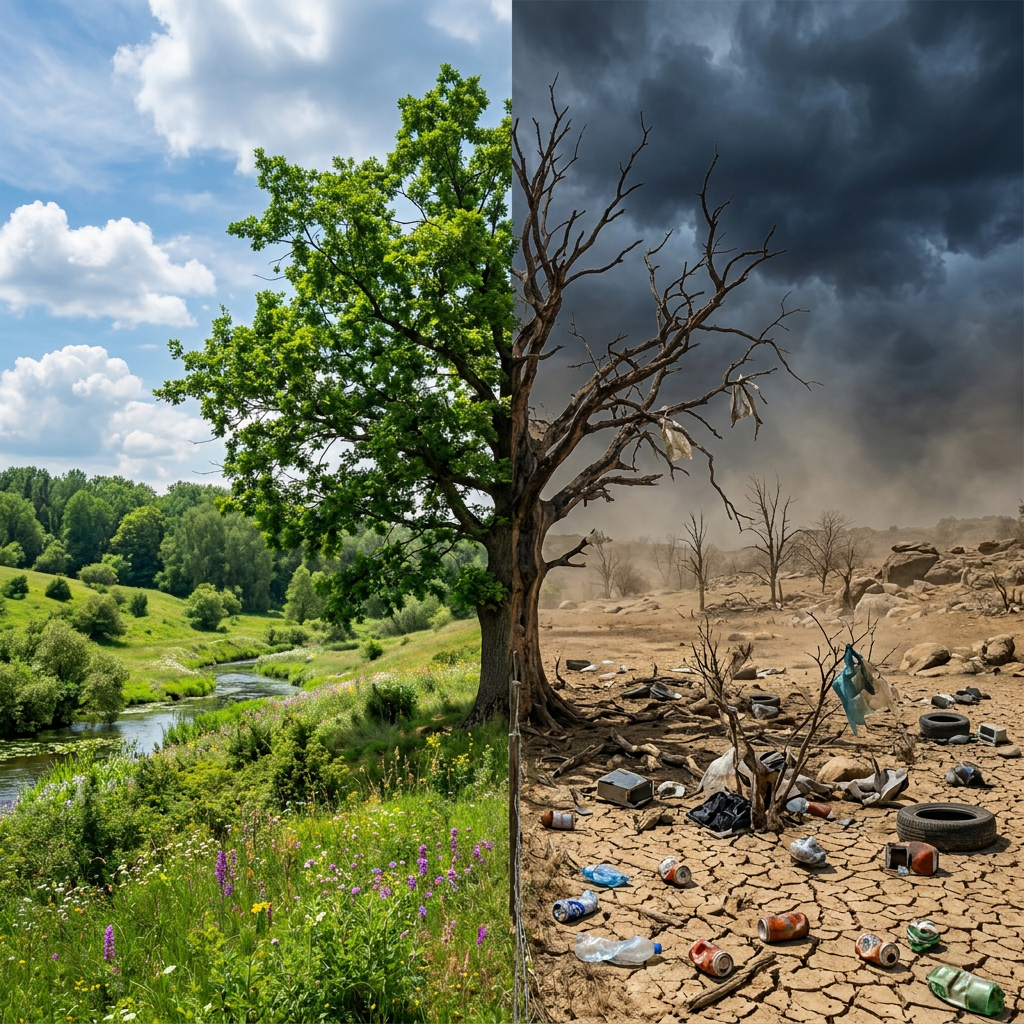
Nature is the most valuable asset that forms the foundation of human life. The air we breathe, the water we drink, the food we eat, and the environment we live in all exist thanks to the opportunities nature provides us. However, we often fail to fully appreciate its value. When the balance of nature is disrupted, its effects are felt not only in the environment but in every aspect of human life. Therefore, our responsibility toward nature requires us to think not only about today but also about the future.
If we do not protect nature, forests will rapidly disappear, clean water resources will become polluted, and air pollution will reach serious levels. As a result, many living species will face the danger of extinction, and the balance of ecosystems will be disrupted. Climate changes will increase, and natural disasters such as droughts, floods, and forest fires will occur more frequently. Agricultural lands will be damaged, food production will decrease, and people will struggle to meet their basic needs. The main reasons for this include unconscious consumption habits, industrial activities that harm nature, excessive use of plastic, and insensitive behavior toward the environment. Seeing nature as an unlimited resource and prioritizing short-term benefits cause these problems to grow even bigger.
Protecting nature is not as difficult as we think; great changes can be achieved through small but conscious actions. Saving water and electricity in daily life, paying attention to recycling, and reducing plastic use are among the most important steps. Using cloth bags, avoiding single-use products, and choosing environmentally friendly items are also very effective. In addition, planting trees, protecting green areas, and using environmentally friendly transportation methods such as public transport or bicycles contribute to nature. Global warming is one of the biggest environmental problems today. The excessive use of fossil fuels, harmful gases released from factories and vehicles, deforestation, and the increase in greenhouse gases lead to global warming. As a result, glaciers melt, sea levels rise, and the climate balance is seriously disrupted. This situation threatens both nature and human life. To prevent global warming, it is very important to turn to renewable energy sources, reduce carbon emissions, pay attention to energy efficiency, and increase environmental awareness.
In conclusion, not protecting nature does not only harm the environment but also endangers the future of humanity. For a healthy, balanced, and sustainable life, we must fulfill our responsibilities toward nature. It should not be forgotten that nature does not belong to us; we belong to nature. Protecting it actually means protecting our own lives and future.
In short: No nature, no future.
 digitalflow
Leave a comment