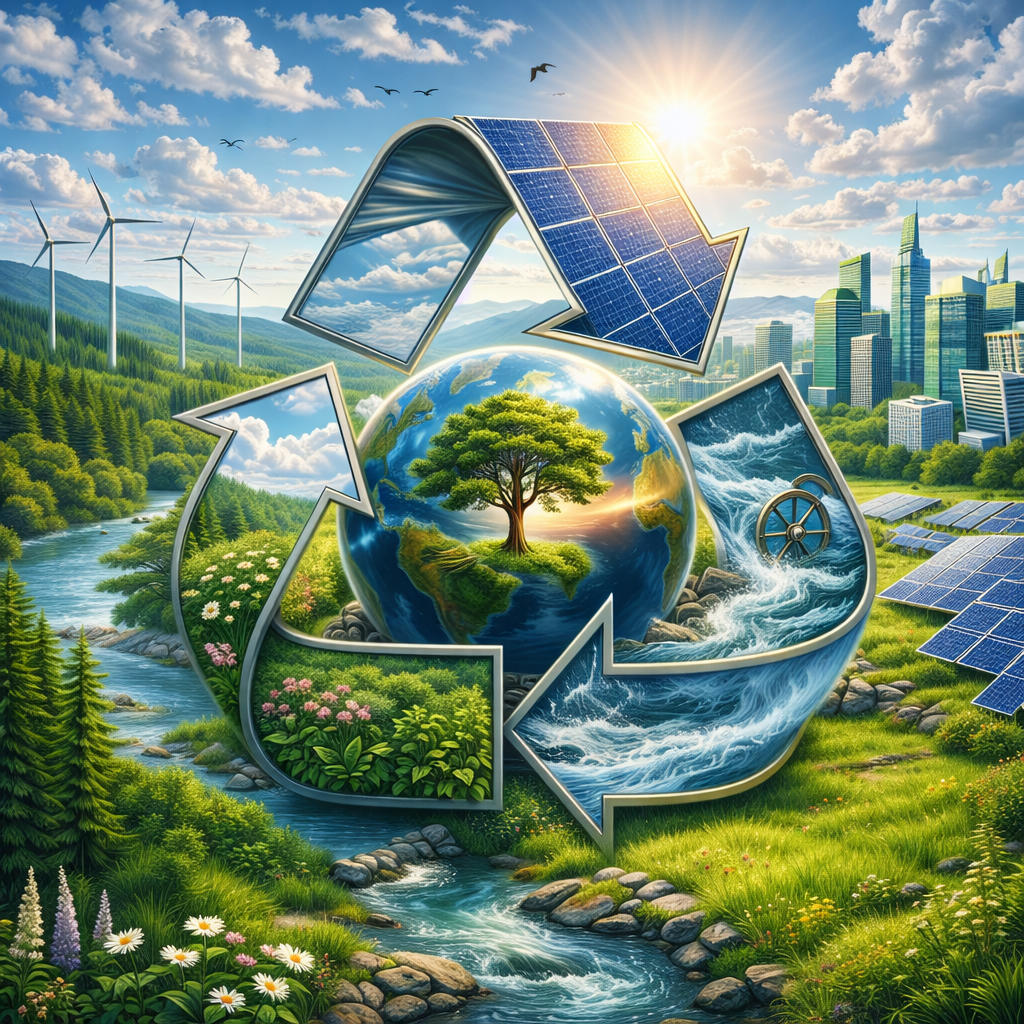
Renewable energy sources are types of energy that naturally replenish themselves and continue to exist without the need for human intervention. These sources are based on natural processes such as sunlight, wind movement, the water cycle, underground heat, and the conversion of organic waste. Their most important features are that they are inexhaustible and cause minimal harm to the environment. Unlike fossil fuels, they do not take millions of years to form and do not run out as they are used. For this reason, renewable energy is considered a sustainable solution that can meet not only today’s energy needs but also those of the future. At the same time, these energy types significantly reduce carbon emissions, helping to mitigate global warming and climate change.
Imagining a world without renewable energy sources is quite concerning. In such a scenario, humanity would depend solely on limited and environmentally harmful resources such as coal, oil, and natural gas. The excessive use of these resources would increase air pollution, accelerate greenhouse gas emissions, and push global warming to an irreversible level. As a result, glaciers would melt rapidly, sea levels would rise, and natural disasters such as droughts and floods would occur more frequently. Additionally, the depletion of energy resources could lead to economic and political crises between countries, making access to energy more difficult and significantly lowering the quality of life. The absence of clean and renewable resources would threaten not only nature but also human health and social stability.
Today, renewable energy sources are actively used in many areas of life. Solar energy is widely used for electricity generation through panels installed on rooftops, as well as for agricultural irrigation systems and heating water. Wind energy generates large amounts of electricity through turbines installed in wide open areas, helping meet the energy demands of cities. Hydroelectric power plants produce energy using the force of rivers and dams, while geothermal energy utilizes underground hot water and steam for both electricity generation and heating. Biomass energy is obtained by processing agricultural waste, animal waste, and other organic materials, supporting energy production while also reducing waste.
The use of these energy sources brings many positive contributions to the environment. First of all, air pollution is significantly reduced, which directly improves human health. Lower carbon emissions help slow down global warming and protect ecosystems. In addition, renewable energy reduces dependence on foreign energy sources, contributing to stronger and more independent economies. This also lowers energy costs in the long term and creates a more sustainable economic structure. Without these resources, environmental damage would increase, and access to energy would become more difficult and expensive. The rapid depletion of natural resources could lead to major crises in the future.
Renewable energy also paves the way for technological advancements. Improvements in solar panel efficiency, more powerful wind turbines, and advancements in energy storage systems enable these resources to be used more widely and effectively. Thanks to these developments, energy production is becoming safer, cleaner, and more sustainable. As humanity continues to discover ways to live in harmony with nature, the need for renewable energy continues to grow.In conclusion, renewable energy sources are not just an alternative form of energy, but a fundamental element that secures the future of humanity. Their use is crucial for protecting nature, improving human health, and ensuring economic sustainability. Otherwise, environmental disasters, energy crises, and a significant decline in quality of life would be inevitable.
Let’s Build a Clean, Sustainable, and Secure Future with the Power of Nature

 digitalflow
Leave a comment